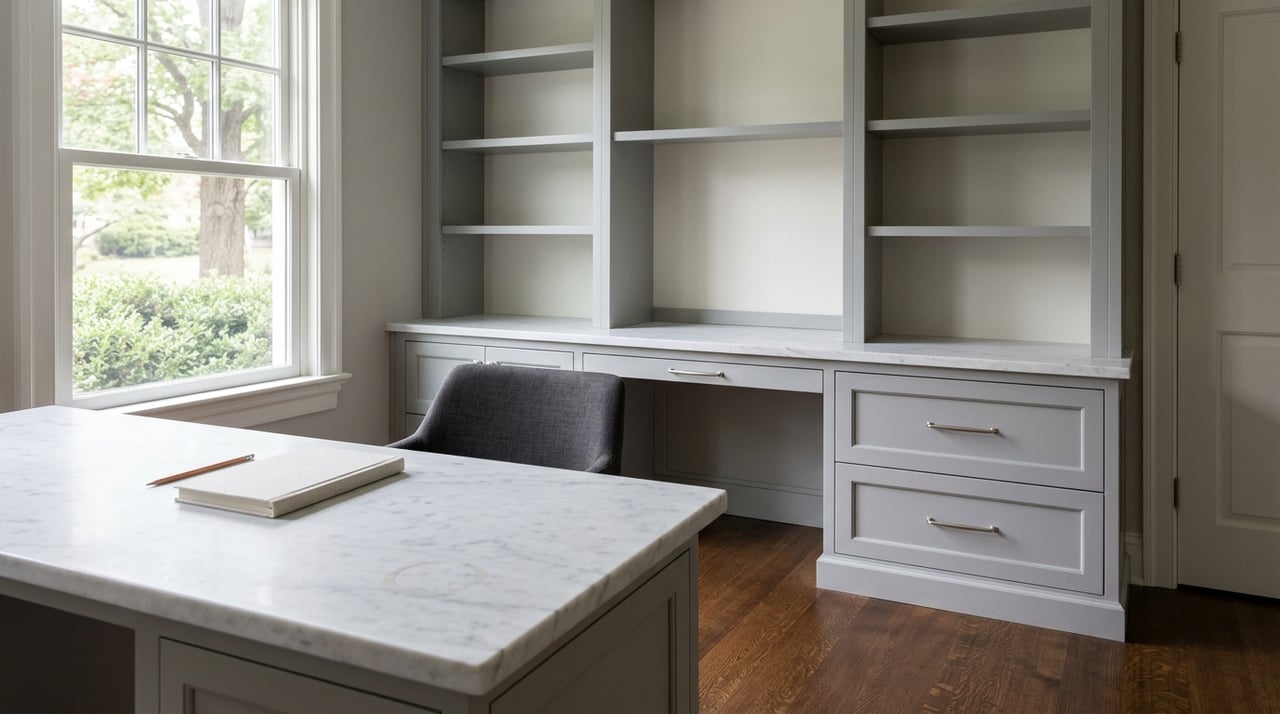
If your workweek includes both Zoom calls and office days, where you live can shape everything from your morning routine to how much room you have at home. In Greater Boston, that often comes down to a simple trade-off: do you want to buy back commute time in the inner suburbs, or buy back space farther west in MetroWest? If you are weighing Waltham, Newton, Framingham, Natick, or towns like Wayland, Weston, Lincoln, and Concord, this guide will help you sort through the real differences. Let’s dive in.
The Hybrid Work Trade-Off
For many buyers, hybrid work has changed the math. You may not need to be close to the office five days a week, but you probably still care about how easy those in-person days feel.
That is where the MetroWest versus inner-suburb decision becomes useful. Based on Census commute data, closer-in communities like Waltham and Newton tend to offer shorter average commute times, while deeper MetroWest towns often give you more room and lower density in exchange for a longer trip on office days.
What Counts as MetroWest?
MetroWest is not just one town or one exact border. The MetroWest Regional Transit Authority service area broadly covers communities west of Route 128/95, including places like Framingham, Natick, Wayland, Weston, Sudbury, and Wellesley.
For hybrid workers, the most practical comparison is this:
- Inner suburbs: Waltham and Newton
- Middle band: Framingham and Natick
- Space-first MetroWest towns: Wayland, Weston, Lincoln, and Concord
Each group offers a different balance of access, space, and day-to-day convenience.
Inner Suburbs Buy Back Time
If you expect to be in Boston or Cambridge regularly, closer-in suburbs usually make office days easier. Census QuickFacts lists average one-way commute times at 24.6 minutes in Waltham and 26.7 minutes in Newton, compared with 30.0 in Framingham, 30.7 in Natick, 30.5 in Wayland, and about 32 minutes in Concord.
That does not sound dramatic on paper, but over a week, those extra minutes add up. If you are commuting multiple times a week, shorter average travel times can mean more flexibility before work, less fatigue at the end of the day, and more usable time at home.
Transit also supports that pattern. The MBTA Worcester Line serves Newton stops as well as Wellesley, Natick, Framingham, and points farther west, while Waltham has rail access via the Fitchburg/South Acton Line.
MetroWest Often Buys Back Space
If your work-from-home setup matters just as much as your office commute, MetroWest starts to look compelling. While townwide lot-size figures are not available in the source data, Census population density offers a strong proxy for how much breathing room a place may offer.
Waltham has 5,117.9 people per square mile and Newton has 4,987.8. By comparison, Framingham is 2,889.4, Natick is 2,473.8, Wayland is 926.8, Weston is 704.6, Lincoln is 492.9, and Concord is 754.3, according to Census QuickFacts.
In practical terms, lower density often translates to more separation between homes, a better chance at a larger yard, and more flexibility for features hybrid households often want, such as:
- A dedicated home office
- A guest room that can double as work space
- A finished lower level or bonus room
- Outdoor space for breaks, pets, or entertaining
If you are home most of the week, those quality-of-life upgrades can matter as much as shaving a few minutes off a commute.
Waltham and Newton: Better for Access
Waltham and Newton are strong options if your priority is staying closer to the core job centers of Greater Boston. They combine shorter commute patterns with more established commercial districts, transit options, and walkable errand clusters.
Newton stands out for its village-based structure. The city describes itself as having 13 villages, multiple transportation systems, and about 1,200 acres of parkland, with planning that supports housing and commercial activity near transit and amenities. For you, that can mean a daily rhythm that feels suburban while still keeping shopping, dining, and services close at hand.
Waltham offers a different but equally practical version of convenience. The city’s Moody Street district is a well-known hub for restaurant and retail activity, and city materials reference about 20 restaurants along with other local businesses. If you like having dining, errands, and casual meetups nearby without heading into Boston, Waltham has a lot going for it.
The trade-off is usually cost per square foot and a denser living environment. For hybrid workers who still spend several days a week in the office, that may be worth it.
Framingham and Natick: The Middle Ground
If you want a more balanced answer, Framingham and Natick are often the most practical middle-band choices. They still offer rail access, established retail and commercial activity, and a more suburban feel than the inner ring.
Framingham’s downtown revitalization efforts emphasize mixed-use redevelopment and support for small businesses, while Natick’s economic development materials point to Natick Center, Route 9, and the Golden Triangle as major hubs. A town report also notes that Natick Mall includes more than 250 retailers and restaurants.
For many households, this is the sweet spot. You are not as close in as Newton or Waltham, but you are also not giving up access to shopping, dining, commuter rail, and everyday services.
This middle band also tends to look more efficient when you think about usable square footage. Based on the March 2026 market data in the research report, Framingham appears to offer the strongest square-footage value in the comparison set, while Natick sits in a middle position between inner-suburb pricing and farther-west space-first towns.
Wayland, Weston, Lincoln, and Concord: Space-First Choices
If your household is truly hybrid, meaning one or two office days a week or even less, a space-first town may offer the better long-term fit. Wayland, Weston, Lincoln, and Concord all stand out in this comparison for lower density and a stronger chance of finding the kind of layout that supports full-time life at home.
That could mean space for two home offices, quieter surroundings for calls, or a property that simply feels less compressed day to day. For many buyers, that added breathing room becomes especially valuable when both partners work from home, host overnight guests, or want flexible indoor and outdoor space.
The trade-off is straightforward. Office days can be longer, and some towns, especially Weston, are not value plays. Instead, they appeal to buyers who are intentionally prioritizing privacy, setting, and room to spread out.
How to Choose Based on Your Week
The right choice often comes down to your actual schedule, not your ideal one. Before you focus too much on town names, think about how your household really lives.
Choose inner suburbs if you:
- Commute to the office three or more days a week
- Want shorter average travel times
- Prefer denser retail and dining districts nearby
- Value transit access and quick errands over lot size
Choose the middle band if you:
- Need a workable commute but want more house for the money
- Like having both commuter access and strong suburban retail options
- Want flexibility without moving too far west
Choose space-first MetroWest towns if you:
- Work from home most of the week
- Need one or more true home offices
- Want more privacy and lower density
- Care more about layout and land than minimizing commute time
Think Beyond the Commute
Hybrid buyers sometimes focus so heavily on office days that they overlook the larger picture. Your home is not just where you sleep between commutes. It is also where you work, recharge, host friends or family, and spend the majority of your time.
That is why the best decision is rarely just about mileage. It is about whether your location supports the way you actually live from Monday morning through Sunday night.
A shorter commute can be a real upgrade. So can a quieter property with enough room for a proper office and a little separation at the end of the workday.
The Bottom Line
For hybrid workers in the Boston area, the clearest takeaway is simple: inner suburbs like Waltham and Newton generally buy back time, while MetroWest towns often buy back space. Framingham and Natick sit in the middle, offering a practical blend of commuter access and suburban convenience.
If you are weighing where that balance feels right for your household, local guidance can make the comparison much clearer. The team at Salem Coughlin Group can help you evaluate commute patterns, home layouts, and town-by-town trade-offs so you can choose with confidence.
FAQs
How do MetroWest and inner suburbs compare for hybrid workers near Boston?
- Inner suburbs like Waltham and Newton generally offer shorter average commute times, while MetroWest towns often offer lower density and more room for home offices, yards, and flexible living space.
Is Waltham or Newton better for buyers who commute several days a week?
- Based on Census commute data, both Waltham and Newton have shorter average one-way commute times than many farther-west towns, which can make them appealing if you expect regular office days.
Are Framingham and Natick good middle-ground towns for hybrid workers?
- Yes. Framingham and Natick offer commuter rail access, strong shopping and service hubs, and a more balanced mix of access and space than either the inner suburbs or farther-west towns.
Why do Lincoln, Weston, Wayland, and Concord appeal to hybrid buyers?
- These towns have lower population density than closer-in suburbs, which suggests more breathing room and a better chance of finding layouts that support dedicated offices, guest rooms, and outdoor space.
What should a hybrid worker prioritize when choosing between MetroWest and the inner suburbs?
- The most important factor is usually how many on-site workdays your household really has, followed by how much you value space, privacy, and a functional work-from-home setup.